The Question That Raised $100M
Why the Best Capital Raisers Don’t Pitch. They Ask.
By ANRIC BLATT • 11 min read
There’s a moment in every capital raiser’s career when the pitch stops working.
Not because the fund is bad. Not because the returns are wrong. Not because the deck needs one more revision.
It stops working because the person across the table has heard it all before. A thousand times. From people who look like you, sound like you, and want the same thing you want.
They’ve built antibodies against pitching. And no matter how polished your presentation, those antibodies kick in the moment you start talking about yourself.
I watched this happen in real time. And what I did about it changed how I think about every capital conversation since.
London. A private dining room above a restaurant in Mayfair. The kind of place where the menu has no prices.
I’d arranged the dinner. On one side of the table: a senior allocator managing north of $2 billion in alternatives. On the other: David [last name redacted], a CTA who is now managing close to $30 billion. At the time, David was raising capital and needed the introduction.
David was brilliant. His track record was exceptional. His strategy was sound. And his ego, which was the exact fuel that made him a great trader, was about to kill the conversation.
For the first eight to twelve minutes, I watched David do what most capital raisers do. He led with credentials. He talked about his returns. He explained his edge. He made the case for why his fund deserved allocation.
The allocator nodded politely. Sipped his wine. Said very little.
I could see it happening. David was hanging himself, and he had no idea. Every sentence about his own brilliance pushed the allocator further away. Not because David was wrong about his track record. Because the allocator didn’t care about David’s track record yet. He hadn’t been given a reason to care.
So I did what I do. I stepped in with a question.
Not to David. To the allocator.
I reframed the conversation. Instead of letting David continue to pitch into a void, I asked the allocator something that put HIM at the center of the conversation. Something that invited him to talk about his world, his experience, his frustrations with managers.
The shift was instant. The allocator leaned forward. He started talking. About the managers who’d disappointed him. About the strategies he believed were overcrowded. About what he wished someone would do differently.
David, to his credit, shut up and listened. And by the end of the dinner, the allocator was asking David questions. Not the other way around.
That dinner led to a significant allocation. Not because David’s pitch improved. Because the conversation changed direction. From presentation to discovery. From talking to asking.
And I’ve been thinking about that moment ever since.
David’s problem wasn’t competence. It was sequence.
He led with the thing that mattered to HIM (his track record) instead of the thing that mattered to the ALLOCATOR (his own experience and needs). And here’s what’s painful about that: David’s ego, the very thing that made him a $30 billion trader, was the thing getting in the way of human connection.
This is the trap. The traits that make you great at building a fund are often the same traits that make you terrible at raising capital for it. Conviction becomes rigidity. Confidence becomes self-absorption. Expertise becomes lecturing.
I see this pattern over and over. Brilliant operators who can’t figure out why their meetings don’t convert.
The answer is almost always the same: they’re talking when they should be asking.
Here’s what’s happening in the brain when someone pitches you versus when someone asks you a question.
When you’re being pitched, your brain activates what psychologists call defensive processing. You’re evaluating claims, looking for holes, preparing counterarguments. Your internal monologue sounds like: “Is this true? What are they not telling me? What’s the catch?”
When someone asks you a thoughtful question and you answer it, something different happens. Your brain activates generative processing. You’re constructing your own narrative, drawing your own conclusions, making your own connections.
And here’s the key: your own conclusions are three to five times more powerful than conclusions someone else gives you.
“Your own conclusions are three to five times more powerful than conclusions someone else gives you. Read that again.”
When an investor decides, through their own process of answering your questions, that they have a gap in their portfolio, that conclusion belongs to them. You didn’t tell them they had a gap. They discovered it. And people act on their own discoveries with far more conviction than they act on someone else’s claims.
This is why the best capital raisers I know talk less than 20% of the time in investor meetings. They ask. They listen. They ask again. The investor does the heavy lifting. And walks away feeling understood, not sold to.
That’s what happened at that dinner in Mayfair. The moment I redirected the conversation from David’s credentials to the allocator’s experience, the power shifted. The allocator went from passive audience to active participant. And active participants write checks. Passive audiences write polite follow-up emails that go nowhere.
Now here’s where most people go wrong with questions.
There’s a breed of aggressive sales trainer, the kind you’ve seen on social media with their sleeves rolled up, veins popping, teaching “killer closing questions” designed to make prospects feel small.
“What’s really holding you back?”
“Don’t you think a serious operator would have figured this out by now?”
“What happens when your fund fails?”
Those questions, delivered to a stranger who hasn’t invited that level of intimacy, are verbal assault. They trigger ego. They create walls. They destroy any chance of trust.
The same questions, asked by a trusted advisor after two hours of genuine conversation? Powerful.
The difference is permission.
I think about it in three levels:
Level One: The Stranger. You’ve just met. You can ask about their world, their interests, what attracted their attention. Surface questions that show curiosity. Nothing deeper.
Level Two: The Acquaintance. They’ve consumed your content. Attended your event. Seen your work. Now you can ask about their approach, what’s working, what they’d change. One layer deeper.
Level Three: The Trusted Guide. They’ve asked for the conversation. They booked the meeting. They came to you. Now the full range of questions opens up: what’s the emotional weight of this challenge? What happens if nothing changes? What would it mean to get this right?
Skip a level and you lose them. Respect the levels and they’ll tell you things they haven’t told their own team.
That night in Mayfair, I had Level Three permission with both parties. I’d known the allocator for years. I’d worked with David. That’s why my question landed. A stranger asking the same thing would have been ignored. Permission is everything.
Over 35 years, I’ve distilled investor conversations down to five questions. Not scripts. Not tricks. Just genuine questions that shift the dynamic from presentation to partnership.
This opens the door. It says: I care about YOUR story, not mine. Whatever they answer tells you everything about their trust level, their frustrations, and what they’re looking for, even if they don’t say it directly. This is the question I asked that night that changed the entire dinner.
This is the gap question. Notice what it doesn’t say. It doesn’t say “What’s wrong with your current managers?” That’s confrontational. “Anything you’d change” is invitational. It gives them permission to be dissatisfied without feeling disloyal. Whatever they answer IS their diagnosis. They just told you the problem. You didn’t have to claim it.
Now they’re designing the solution. In their own words. Using their own criteria. And here’s what happens: the ideal they describe will sound a lot like what you offer, if you’re talking to the right person.
This is the question that creates urgency, without you manufacturing it. They picture the consequence of inaction using their own numbers, their own timeline, their own stakes. It’s not pressure. It’s clarity. Use this one with care. Only at Level Three permission.
Not “let me show you our fund.” Not “here’s why you should invest.” An invitation. They can say yes or no without losing face. And if they say yes, it’s because THEY concluded it makes sense, not because you pushed them there.
Five questions. Zero pitching. And a conversation that feels like partnership from the first minute.
Here’s what David taught me that night, without meaning to.
The traits that make you successful can become the traits that isolate you. Your conviction, your expertise, your track record: these are assets. But they become liabilities the moment you lead with them instead of leading with curiosity.
David’s ego wasn’t a character flaw. It was rocket fuel. It built a $30 billion business. But in that dining room, it was the wrong tool for the moment. The allocator didn’t need to be impressed. He needed to be heard.
If you’re raising capital and every meeting feels like a performance, consider the possibility that the problem isn’t your pitch. It’s that you’re pitching at all.
The best capital I’ve ever raised came from conversations where I learned more than I taught. Where the investor felt heard, not handled. Where the relationship started before the transaction.
That’s what Capital Magnetism looks like in practice. Not a better deck. Not a smoother close. Better questions, asked with earned permission and genuine care.
“Stop telling. Start asking. The rest takes care of itself.”
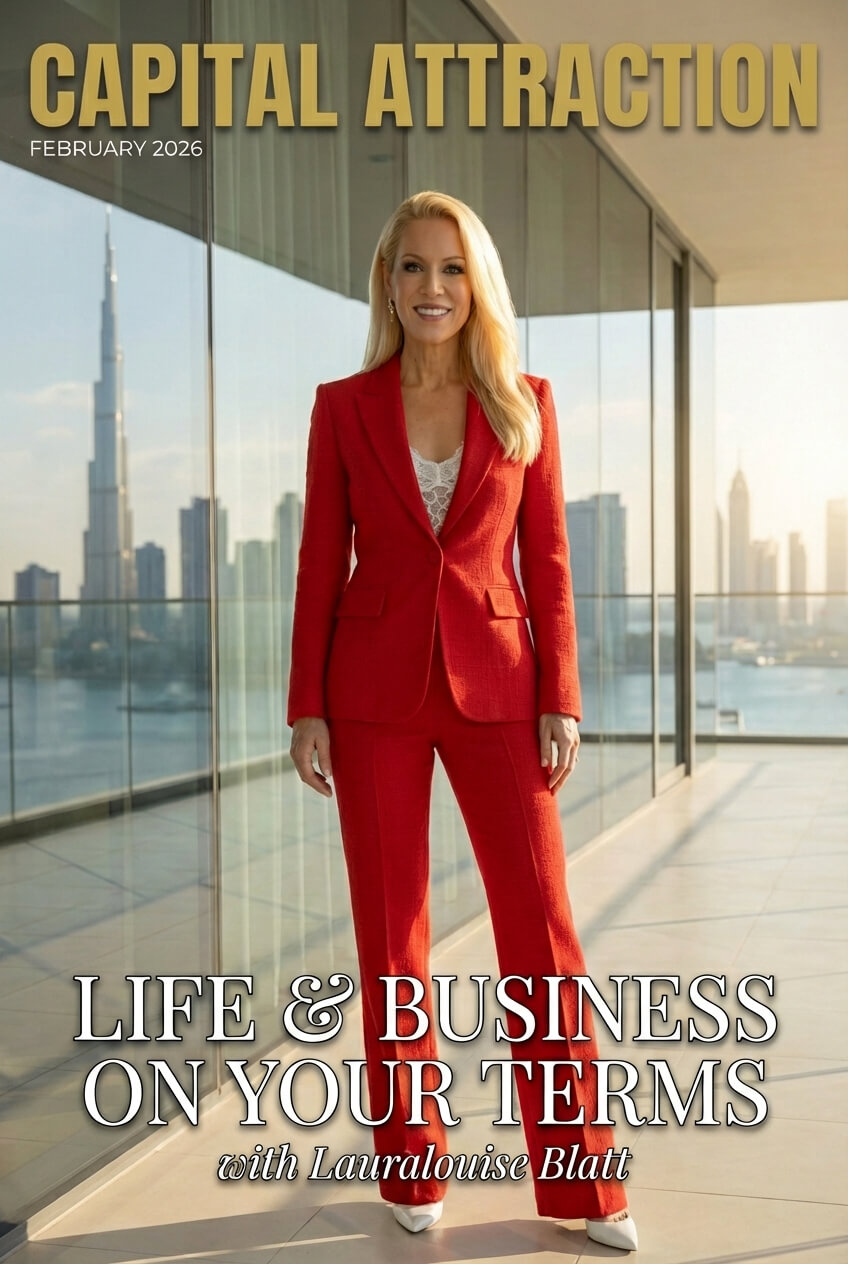
Anric Blatt is the founder of Magnum Vault Partners LLC and author of The TAO of Capital Attraction. With 35+ years and $5B+ raised across five continents, he and partner Lauralouise help capital raisers transform from sophisticated beggars into capital magnets.
© 2026 Magnum Vault Partners LLC. All rights reserved.
Stop Chasing. Start Attracting. Life & Business on YOUR Terms™